CANON Enters New Phase to Increase Focus on Adversarial Activity

HRL Laboratories Complex Analytics of Network of Networks (CANON) system has achieved its second phase in the Modeling Adversarial Activity program, funded by the Defense Advanced Research Project Agency. CANON is a set of software tools that can “do the math” for intelligence analysts looking for activity directed by adversaries. Using integrated information from networks of networks, CANON analyzes and flags questionable adversarial activity.
Memory Boost With Just One Look

HRL Laboratories, LLC, researchers have published results showing that targeted transcranial electrical stimulation during slow-wave sleep can improve metamemories of specific episodes by 20% after only one viewing of the episode, compared to controls. The same technology may offer a non-invasive treatment to mitigate bad memories that might cause post-traumatic stress disorder (PTSD). Metamemory describes the sensitivity of whether memories are recalled accurately or not, such as during eyewitness testimony.
Infrared Cameras WIRED to Require Less Cooling
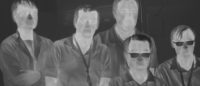
HRL Laboratories, LLC, is completing development of wafer-scale infrared focal plane arrays that will dramatically reduce the size and cost of infrared or IR cameras. HRL was selected to carry on Phase III of the Defense Advanced Research Project Agency’s program Wafer-scale Infrared Detectors or WIRED.
The ExACT Way to Safe Autonomy
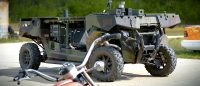
HRL Laboratories tests its Expressive Assurance Case Toolkit (ExACT) in an autonomous M-RZR vehicle as part of the Assured Autonomy program sponsored by the Defense Advanced Research Project Agency (DARPA). The system can analyze AI-based systems to find or prevent safety failures, computing the circumstances that could avoid bad outcomes.
New Pads Absorb Shock Better Than Foam With Air Flow and Easy Manufacture

HRL Laboratories has published test results showing shock-absorbing pads made from HRL’s microlattice material had up to 27% higher energy absorption efficiency than the current best-performing expanded polystyrene foam when sustaining a single impact and up to 35% higher energy absorption efficiency than state-of-the-art vinyl nitrile foam when impacted repeatedly. Microlattice could replace current foams in protective packaging, shock isolators for electronics, vehicle interiors, and helmet padding from football to bicycle helmets.
HRL Laboratories Board Chairman Paul Kaminski to be Inducted into Aviation Hall of Fame

Dr. Paul G. Kaminski, Chairman of the Board of Directors of HRL Laboratories, LLC, has been selected as a 2020 inductee into the National Aviation Hall of Fame. An aeronautical engineer, Kaminski oversaw development, production, and deployment of major stealth aircraft for the United States Air Force.
Adjustable Negative Stiffness Smooths Every Ride

HRL’s patented adjustable negative stiffness system enables vibration control for land or sea vehicles without bulky seats. The system protects passengers from injury due to rough roads or water conditions at a tenth of the power usage of state of the art shock absorbing systems.
HRL, nTopology, and Morf3D Explore Advanced Design and Materials with 7A77 – The World’s Strongest Additive Aluminum
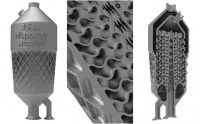
With the launch of Aluminum 7A77.60L powder, California’s HRL Laboratories functionalized the strongest additive manufacturing aluminum to date. Now, working with 3D design and engineering software company nTopology and aerospace manufacturing service provider Morf3D, HRL has built an application presenting 7A77’s potential in heat transfer and flow applications.
HRL Laboratories Team Wins 2019 R&D 100 Award
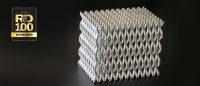
HRL Laboratories has won an R&D 100 award in the Mechanical/Materials category for its 7A77 aluminum alloy powder project Nano-functionalized Alloys for Additive Manufacturing. High-strength aluminum alloy can be printed from the powder using standard additive manufacturing equipment, the first time this alloy has been 3D printable.
No Satellite, No Problem!

HRL Laboratories’ new chip-based gyroscopes and accelerometers enable position, navigation, and timing equal to GPS even when satellite signals are obstructed by buildings or terrain.