HRL Paper on Gallium Nitride Integrated Circuits Wins IEEE George E. Smith Award

The HRL team achieved the first gallium nitride (GaN) complementary metal-oxide-semiconductor field-effect-transistor technology, establishing superior GaN transistor performance harnessed in an integrated circuit. GaN could become the technology of choice for power conversion circuits currently made in silicon.
HRL and McGill Scientists Confirm Transcranial Stimulation Effects and Determine a Key Mechanism

Study shows transcranial learning effect not dependent on neuron firing rates. HRL Laboratories, LLC, researchers have determined how non-invasive transcranial direct current stimulation (tDCS) could increase performance of associative learning.
HRL Researchers Receive IARPA Award for Hybrid Forecasting Competition
HRL Laboratories, LLC researchers in the Center for Computational Network Intelligence, Information and Systems Sciences Laboratory received an award from IARPA to enter the Hybrid Forecasting Competition.
Metallurgy Breakthrough: HRL Engineers 3D Print High-Strength Aluminum, Solve Ages-Old Welding Problem Using Nanoparticles
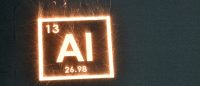
HRL has made a breakthrough in metallurgy with the announcement that researchers have developed a technique for successfully 3D printing high-strength aluminum alloys—including types Al7075 and Al6061.
HRL High-Temperature Ceramics 3D-Printing Technology Selected as R&D 100 Finalist
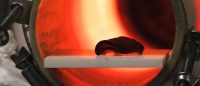
HRL Laboratories, LLC, has been selected as a 2017 R&D 100 Finalist with the entry Additively Manufactured High-Temperature Polymer-Derived Ceramics.
HRL Receives NASA Award to 3D Print Ceramic Rocket Engine Components

HRL has received an award as part of NASA’s Space Technology Research, Development, Demonstration, and Infusion program to develop additive manufactured (3D-printed) ceramic rocket engine components.
HRL Researchers Develop a Low-Power Cold-Atom Source for Atomic Clocks and Physics Experiments

HRL researchers have developed a reversible alkali atom source that runs at low power and low voltage, which is beneficial in applications such as smaller, more efficient, and ultimately portable atomic clocks that use cold atoms.
HRL Laboratories Researcher Chosen for U.S. Frontiers of Engineering Symposium

HRL Senior Research Staff Engineer Florian Herrault has been chosen to participate in the National Academy of Engineering’s (NAE) 23rd annual U.S. Frontiers of Engineering (USFOE) symposium.
HRL Team Receives DARPA Award to Develop Magnetic Integrated Components

HRL Laboratories, LLC, has received an award from the Defense Advanced Research Project Agency (DARPA) under the Magnetic, Miniaturized, and Monolithically Integrated Components (M3IC) program.
HRL and Microsoft Researchers Team Up To Create Advanced Camera with a Highly Curved Image Sensor
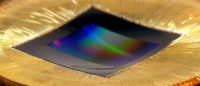
HRL announced the successful results of research initiated and supported by Microsoft Research to create a prototype curved-sensor camera that surpasses the sharpness performance of larger professional camera systems, improving image uniformity and illumination.